Opening a new kitchen, taking over an existing space, or inheriting a trap nobody has records for. Baseline cleans, honest assessments of what you have, and a service schedule set from measurements rather than assumptions.
In a commercial kitchen in Corpus Christi the grease trap sits between every kitchen drain and the city's wastewater system, and nobody sees it until it backs up.
Every commercial kitchen in Corpus Christi that produces grease bearing wastewater needs a trap or an interceptor between its fixtures and the city sewer. That much everybody knows. What catches operators out is everything downstream of the decision: who sized it, what it was sized for, whether the menu that eventually opened bears any resemblance to the one the sizing assumed, and who is keeping the records.
The consequences are common. A concept that was designed as a salad and sandwich counter with a modest indoor unit gets sold, the new owner adds a fryer and a flat top, and a trap sized for one operation is now handling a completely different grease load. It still works, technically. It just fills three times faster than anyone is scheduling for.
Opening a new kitchen
Sizing is a design decision, not a guess
Plumbing codes set out how a grease interceptor is sized. Hydromechanical units are rated by flow in gallons per minute with a corresponding grease retention capacity, and are expected to be certified to a recognized standard such as ASME A112.14.3 or tested to the PDI G101 method. Gravity interceptors, the large in ground tanks, are sized by volume and retention time. Your plumbing engineer or designer runs that calculation against your fixture schedule.
What a pumping contractor can usefully add is the operational reality check: telling you that the 50 gallon unit specified for your space is going to need service every three weeks given the menu you have described, and that a slightly larger unit specified now costs far less over five years than the extra visits will. That is worth knowing while the drawings are still open.
What connects and what must not
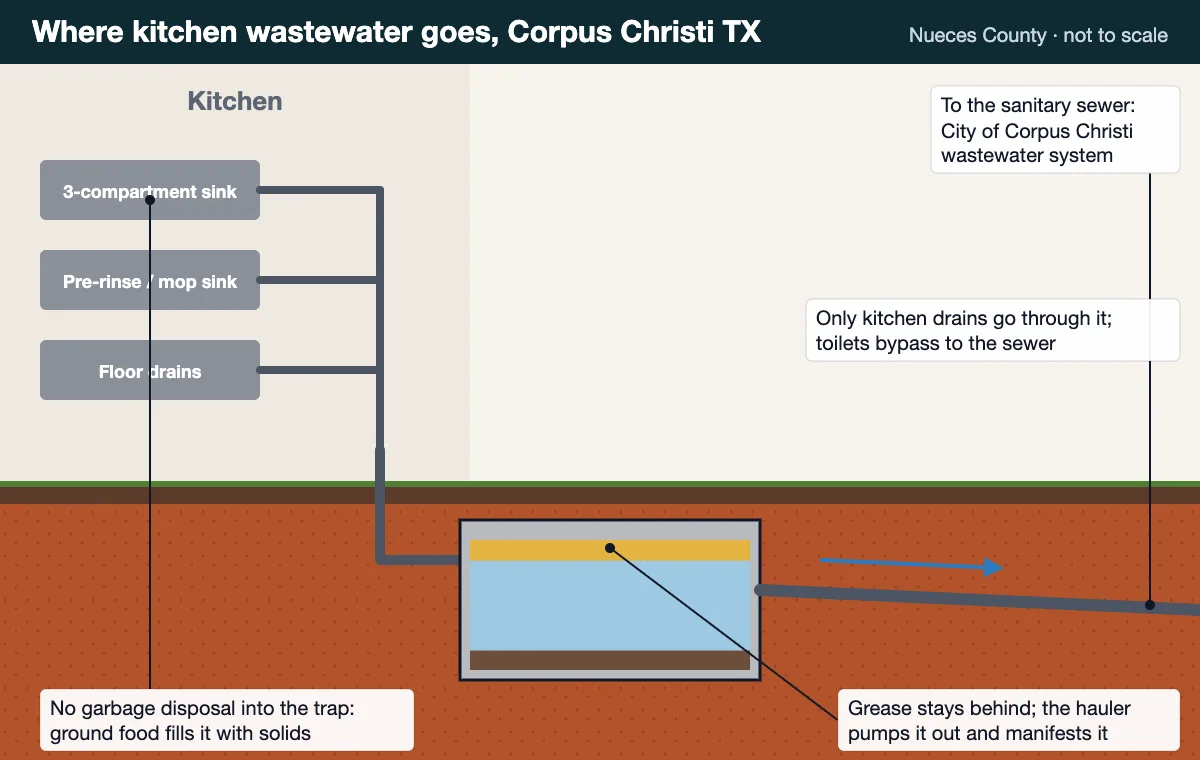
Connect: three compartment sinks, pre rinse and pot sinks, dish machines, wok ranges, combi ovens with drains, mop sinks, and cook line floor drains and floor sinks.
Never connect: toilets or any sanitary fixture. Sanitary waste does not belong in a grease trap and connecting it creates a far worse problem than the one you are solving.
Check before specifying: food waste disposers. Many jurisdictions restrict or prohibit them upstream of a grease trap because they load the tank with solids that shorten the service interval dramatically.
Leave accessible: the trap lid. A unit buried behind a fixed equipment run or under a built in station is a unit that gets serviced badly, because the crew cannot get proper access.
The access mistake that costs you for years
Some Corpus Christi kitchens have a walk in cooler, a fixed prep bench, or a new equipment line installed directly over the trap lid. Every single service from that point is slower and worse, and a full clean is barely possible. When your kitchen is being laid out, physically stand on the trap lid and check you can open it fully. It takes thirty seconds and saves years of bad cleans.
Taking over an existing space
An inherited space can come with equipment and a trap nobody has records for. The first pump-out and measurement set the baseline.
A change of ownership is the single best moment to establish a clean baseline, and it is almost always skipped because everybody is focused on the build out and the opening date.
What to do on a takeover: open the trap before you trade, measure grease depth, solids depth, and total liquid depth, fully evacuate it, scrape and back flush, inspect and photograph the baffle and the tank interior, and note the lid and frame condition. You end up with a documented starting point and a known good tank.
That matters for two reasons. First, if the previous operator neglected it for years, any structural damage is theirs and not yours, but only if you can show the tank condition on the day you took it on. Second, the depths from that baseline plus a measurement at 30 days of trading gives you your own loading rate under your own menu, which is the only number that should set your schedule.
Records, and why yours should start on day one
Grease trap waste in Texas is a regulated waste stream. It has to be transported by a registered hauler and tracked on a manifest to a permitted disposal facility. As the generator, your obligation is to have the trap serviced properly and to keep the records showing that it was.
A new operator who starts a simple folder on day one, with every trip ticket filed in date order, will never have a bad conversation about it. An operator who inherits a space with no records and never starts their own is one inspection away from a problem they cannot answer. The Nueces County rules guide covers what the paperwork actually has to show.
Kitchen types in Corpus Christi
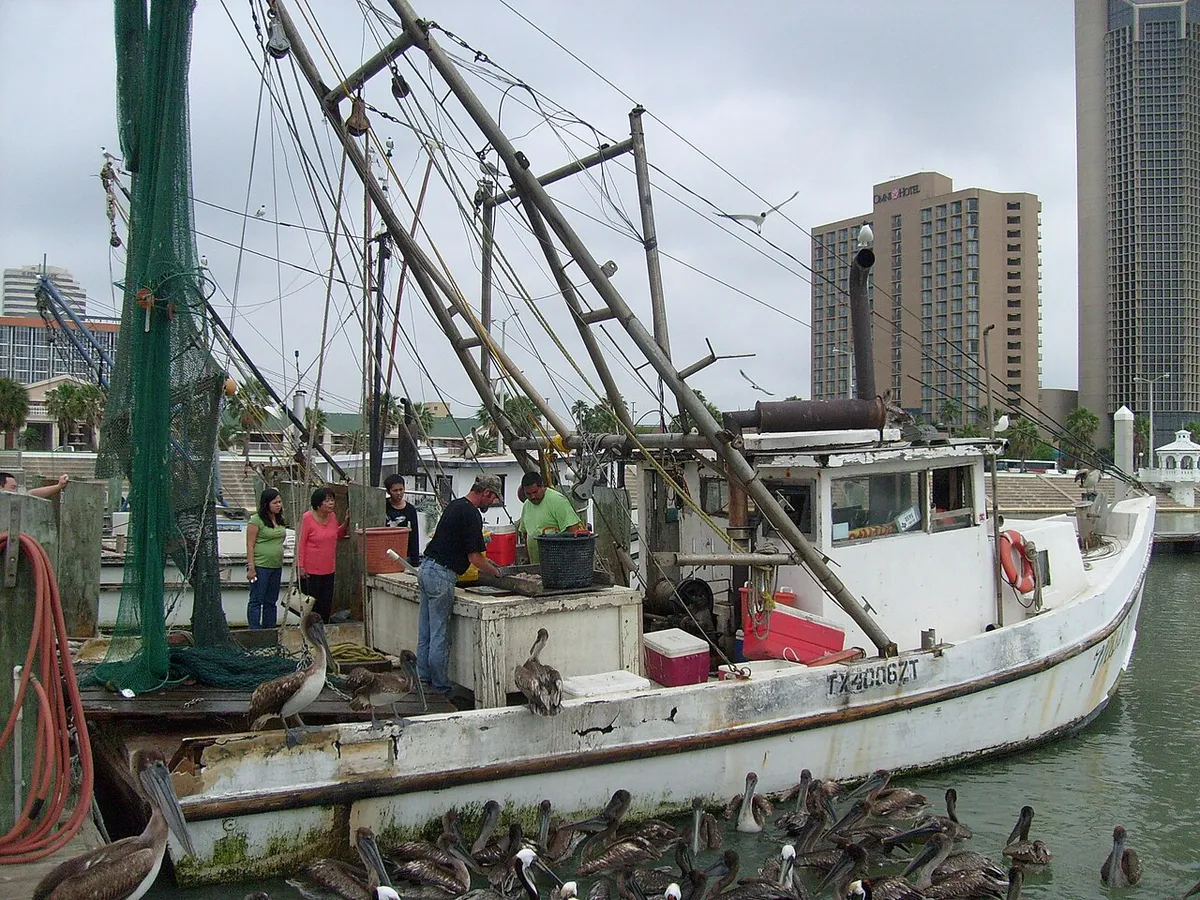
Seafood frying along the bayfront and on the island puts some of the heaviest grease loads in the city on its traps.
Full service restaurants and seafood houses. Highest grease loads in the market, particularly anywhere running a fryer through both services. Usually 75 to 100 gallon indoor units or a shared outdoor interceptor.
Bars and music venues. Small unit, awkward access behind the bar or in a cellar, and a load that is consistently heavier than expected because of the food menu nobody accounts for.
Hotels and event venues. Large interceptors, banquet peaks that produce enormous single day loads, and tighter record keeping expectations.
Schools, care facilities, and institutional kitchens. Predictable volume, long term contracts, and a genuine need for clean documentation.
Coffee shops, bakeries, and counter service. Lower loads, longer intervals, but still a required trap and still a required record.
Food halls and shared centre kitchens. Multiple tenants on one interceptor, contested cost splits, and a load profile driven by whichever tenant fries the most.
Getting the first schedule right
The sensible plan for any new or newly taken over kitchen is the same: baseline clean before opening, a measured service at roughly 30 days, and then an interval set from those two data points. After that the interval gets reviewed every time the menu, the volume, or the season changes materially.
It costs one extra visit in year one and it replaces guesswork with a number. Most Corpus Christi kitchens that do it end up on a 30 or 60 day route and never have a backup.
I am taking over an existing restaurant space. What should I check?
Get the previous operator's trip tickets if they exist, and if they do not, assume the trap has not had a genuine full clean recently. Book a baseline service before you open, measure the depths, and photograph the baffle. You want a documented starting point, because if there is a structural problem with the tank you would much rather discover it during your build out than three weeks into trading.
How is a grease trap sized for a new kitchen?
Sizing is driven by the fixtures discharging to it and their drainage load, and the plumbing code method your designer works to. Plumbing codes size hydromechanical units by flow rate in gallons per minute with a corresponding grease capacity, and gravity interceptors by retention time and volume. The short version is that sizing is a design calculation done by your plumbing engineer, not a number a pumping contractor picks. What a pumping contractor can tell you is how the size they have specified will behave in practice under your actual menu.
What fixtures should be connected to the trap?
Anything producing grease bearing wastewater. Three compartment sinks, pre rinse stations, dish machines, wok ranges, mop sinks, and floor drains and floor sinks in the cook line area. What should never be connected is a toilet or any other sanitary fixture, and food waste disposers are restricted in many jurisdictions because they push solids straight into the tank. Check your local requirement before you specify one.
Prep sinks, the three-compartment sink and floor drains all feed the trap, so what goes down them sets how fast it fills.
Do I need a certain kind of trap to pass inspection?
Units are expected to be certified to a recognized standard rather than fabricated ad hoc. Hydromechanical grease interceptors are commonly certified to ASME A112.14.3 or tested to PDI G101, and plumbing codes reference those standards when setting rated flow and grease capacity. If somebody offers to weld you a box, that box is unlikely to have a rating an inspector will accept.
How soon after opening should the first cleaning be?
Sooner than you think. Book a service at roughly 30 days regardless of what the tank looks like. Not because it is necessarily due, but because measuring the depths at a known 30 day point gives you your real loading rate immediately instead of guessing at it for a year. From that one measurement you can set a correct interval for the life of the menu.
Who is responsible for the trap in a leased space, me or the landlord?
Read the lease, and read it before you sign. In Corpus Christi strip centres it varies a lot. Sometimes the tenant owns the indoor unit and the landlord owns the shared outdoor interceptor. Sometimes maintenance is a CAM charge. Sometimes the lease is silent, which in practice means you will be the one arguing about it when the line blocks. Get it in writing which party schedules service and which party keeps the records.
Tell us the address, what you are planning to run, and whether the trap is indoor or outdoor. Get a quote for a baseline clean and an honest read on the interval your menu is going to need.