Who regulates what, which paperwork has to exist, how long you keep it, and what an inspector actually asks to see. Written for Corpus Christi operators rather than for regulators.
Requirements change, and local ordinances differ from state rules. Treat this page as orientation, then confirm the current detail with the Texas Commission on Environmental Quality, the City of Corpus Christi wastewater department, and your local health authority. Links to the primary sources are at the end of this page.
Three layers of oversight
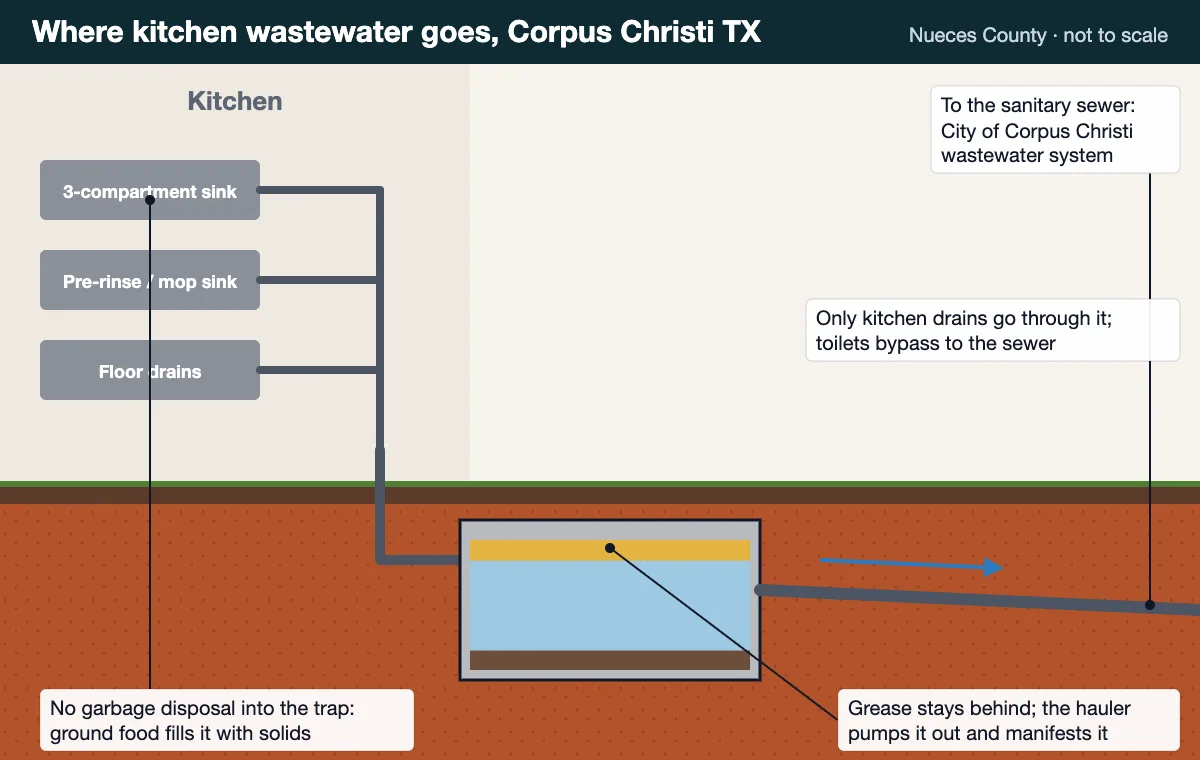
Three layers of oversight follow the waste: the city's wastewater rules on what leaves the trap, TCEQ rules on hauling it, and health inspections inside the kitchen.
Operators get confused about grease trap compliance because three different bodies touch it, each caring about a different part.
The state, through TCEQ
Grease trap waste is a regulated waste stream in Texas. The Texas Commission on Environmental Quality governs who may transport it, the manifest system used to track it from your kitchen to its disposal point, and which facilities are permitted to accept it. A hauler who moves this waste must hold a TCEQ transporter registration, and that number belongs on your paperwork.
The city, through wastewater and FOG requirements
Corpus Christi, like every city operating a public sewer system, has requirements governing what may be discharged into it and what pretreatment food service establishments must provide. This is where installation requirements, maintenance obligations, and local record keeping expectations live. Municipal FOG programs exist because grease is a leading cause of sanitary sewer overflows, and a site that causes one attracts attention afterwards.
The health authority, through your food establishment permit
Your restaurant operates under a food establishment permit administered locally and renewed annually. Routine inspections are conducted against the Texas Food Establishment Rules. A grease trap backing up into a kitchen is a food safety finding, not merely a plumbing one, which is why a trap problem can show up on a health inspection report rather than a wastewater notice.
What a trip ticket is and why it is the centre of everything
Almost every compliance conversation about grease traps resolves to one question: can you show that the trap was serviced and that the waste went somewhere legitimate? The trip ticket, also called a manifest, is the document that answers it.
Generator: your business name and the service address. This is you.
Date and time of collection.
Volume removed, in gallons. The single most useful number on the document and the one almost nobody checks.
Transporter name and TCEQ registration number.
Receiving facility: the permitted site that accepted the load for treatment, disposal, or land application.
Signatures from the transporter and, where applicable, the generator and the receiving facility.
Keep every one of them. File them in date order in a folder that lives on site rather than in somebody's email. Texas record keeping obligations for this waste stream run to multiple years, and an inspector wants to see a continuous run, not a single recent ticket.
Audit your own service with the volume line
Pull your last six tickets. Compare the volume removed against your tank size. If a 1,000 gallon interceptor keeps producing 250 gallon loads, you are being skimmed and paying for a cleaning. That check takes two minutes and it is the most useful compliance habit an operator can build.
Maintenance obligations in practice
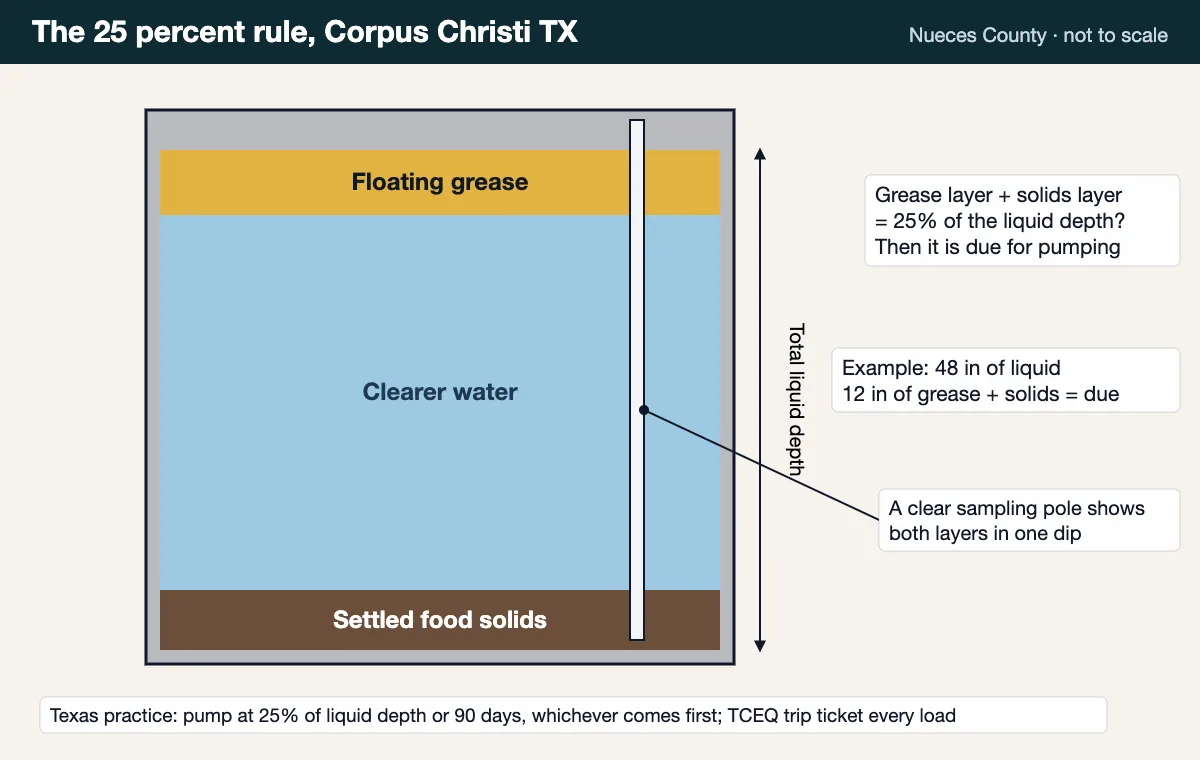
In practice the obligation is to pump before 25 percent or 90 days, and keep the trip ticket that proves it.
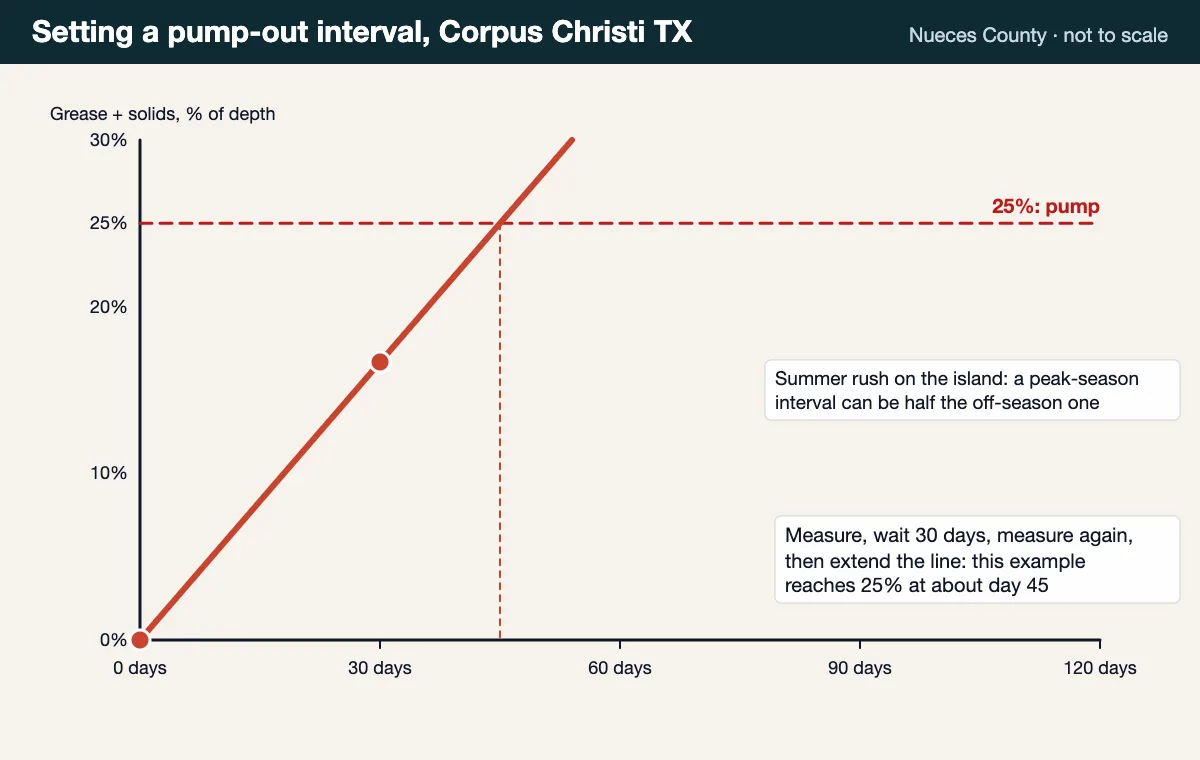
The operational rule that governs most Corpus Christi kitchens is the two trigger standard: have the trap serviced when grease and solids reach 25 percent of the total liquid depth, or at minimum every 90 days, whichever comes first. The 90 day figure is a ceiling. Treating it as a schedule is a very common compliance error, because a fry heavy kitchen crosses 25 percent well inside a month.
Alongside that, expect your installation to be judged against plumbing code requirements. Grease interceptors are expected to be certified to recognized standards rather than improvised, sanitary fixtures must never be connected to a grease trap, and access has to be practical enough for the unit to actually be serviced. The commercial kitchen guide covers the specification side in more detail.
A records system that takes five minutes to set up
One physical folder, kept in the office, labelled with the service address.
Every trip ticket filed in date order, most recent at the front.
A single sheet at the front listing tank size, tank type and location, current service interval, and the date the interval was last reviewed.
A photo of the baffle and tank interior from your most recent full clean, printed or stored somewhere findable.
Your food establishment permit and most recent inspection report in the same place.
That is the entire system. Operators who maintain it never have a difficult inspection conversation about grease, because the answer to every question they will be asked is physically in the folder.
What to expect on the compliance side
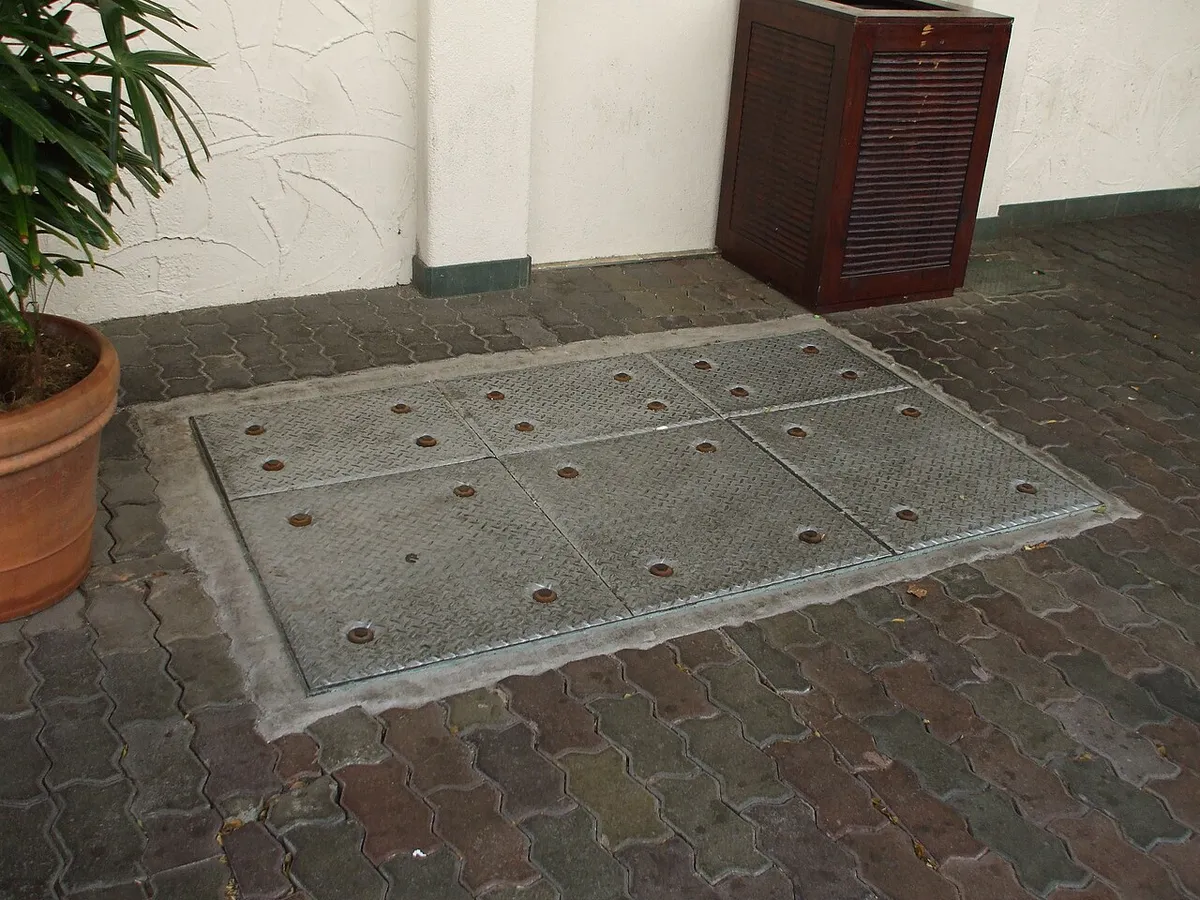
Inspectors want the lids findable and openable, and the paperwork for the last pump-out on site.
The manifest should be completed and signed for every job, with a copy left on site before the truck departs. The volume removed goes on the ticket, so your records are auditable rather than decorative. Recording the measured grease and solids depths too builds a documented trend showing that your interval is evidence based rather than arbitrary. If you lose a ticket, the hauler should be able to resend it.
None of that is a premium service. It is the baseline any hauler should be providing, and the fact that it is often missing is precisely why it is worth stating plainly.
These are the authoritative starting points. Where an agency reorganizes its site, the top-level domain below will still get you to the current version of the rule.
The permitting that touches you as a restaurant operator sits in two places. Your food establishment operates under a health permit, which in Corpus Christi is issued through the local public health authority and renewed annually. Separately, your city wastewater and FOG requirements govern how the trap is installed and maintained. The hauler side is where state registration bites: the company transporting your grease waste must be registered with TCEQ as a transporter, and that registration number appears on your manifest.
What does TCEQ actually regulate here?
Grease trap waste is a regulated waste in Texas. The rules governing it sit in the Texas Administrative Code under the sludge and domestic septage provisions, and they cover who may transport it, the manifest system used to track it, and which facilities may accept it for disposal or land application. In practice that means your waste has to leave on a registered truck, travel on a completed trip ticket, and arrive at a permitted site.
How long do I need to keep my trip tickets?
Keep them for several years and keep them on site. Texas record keeping requirements for this waste stream run to multiple years, and the practical reality is that an inspector asking about your trap wants to see a run of tickets, not one. A folder with every ticket filed in date order is the entire compliance system for most restaurants. If you have lost tickets, ask your hauler to resend copies rather than leaving a gap.
The records that satisfy an inspector are the same ones that set a good interval: dated depth readings and trip tickets.
What has to be on the manifest?
A trip ticket identifies the generator, the date and time of collection, the volume removed, the transporter and their registration number, and the permitted facility that accepted the load, with signatures. The volume figure is the part most operators never look at, and it is the part that tells you whether you got a full pump-out or a skim.
Are enzyme additives allowed instead of cleaning?
No jurisdiction we are aware of accepts additives as a substitute for mechanical cleaning, and many FOG programs explicitly prohibit using them for that purpose. The reason is straightforward. Additives emulsify grease so it passes through the trap rather than being captured, which shifts the problem into the public collection system where it causes overflows. Using them does not reduce your cleaning obligation.
What happens if I cannot produce records at an inspection?
It varies by inspector and by what else they find, but the general pattern is that an absence of records is treated as an absence of maintenance until you prove otherwise. That can mean a violation noted, a correction deadline, a re inspection, and escalating enforcement if it repeats. It is an entirely avoidable category of problem, because the fix is a folder and a habit.