Nobody's storm checklist starts with the grease trap, and that is exactly why it causes problems afterwards. Here is what to do before a system arrives, what to leave alone during, and what to check before you reopen.
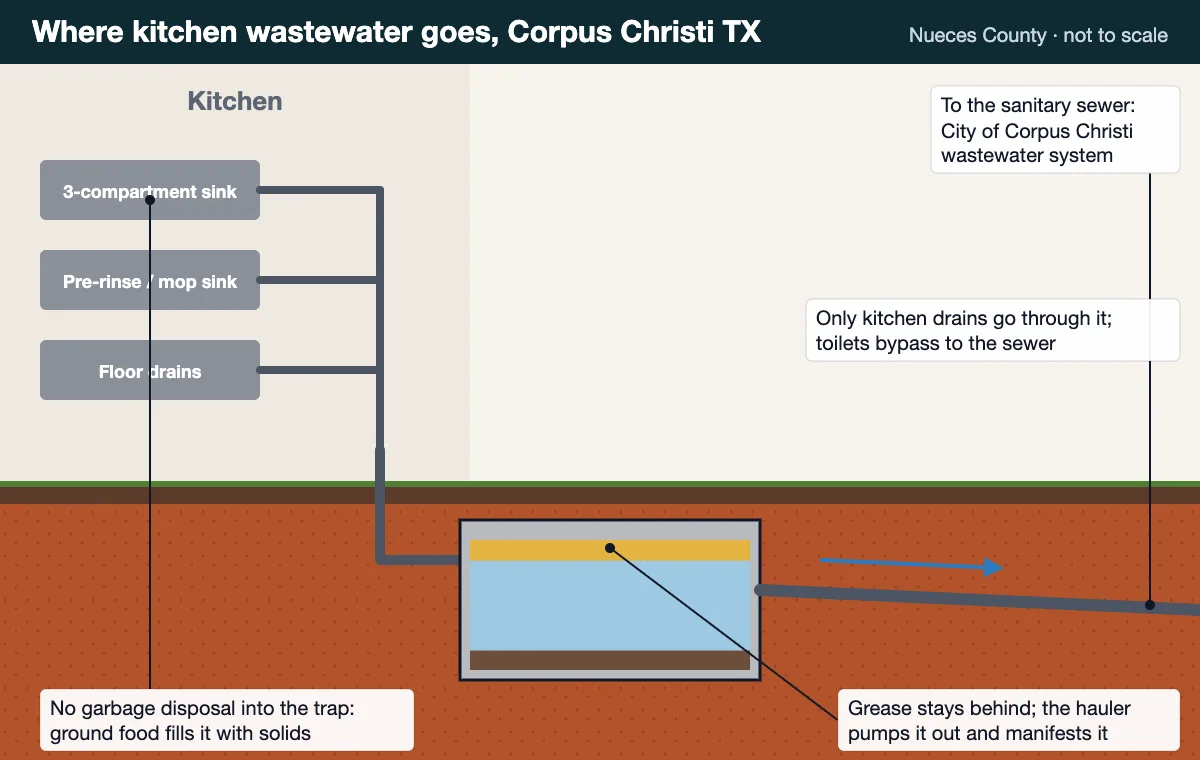
Hurricane prep for a grease trap in Corpus Christi starts with the path: if the city system backs up in a storm, everything in the trap has nowhere to go but back up the kitchen drains.
Storm prep in a Corpus Christi restaurant is a well rehearsed routine. Board or shutter the glass. Move stock out of walk ins or arrange generator coverage. Secure patio furniture, umbrellas, and signage. Photograph the building for insurance. Back up the point of sale. Decide when to send staff home.
The grease trap is never on that list, and then it becomes a problem in the week after the storm, when the kitchen is trying to reopen and something in the building smells like a sewer, or the interceptor lid in the parking lot has shifted, or a health inspector asks a question nobody prepared for.
It takes one phone call and one hour of a truck's time to remove that entire category of post storm problem. This page is the argument for making that call early.
Call before the watch, not after
Once a hurricane watch is issued for the Coastal Bend, every grease hauler in the region is taking the same calls at once, crews are securing their own homes and equipment, and traffic is heading north. Availability collapses. If a named system is in the Gulf with any track toward Texas, book the pump-out then. If it misses, you have a freshly cleaned trap and nothing lost.
Before the storm
A tank pumped before the storm starts the closure empty, rather than sitting through it at 20 percent with a grease cap ready to go back up the drains.
Pump the tank
An empty trap refilled with clean water is a neutral object. A full trap is a sealed container of decomposing organic matter that is about to lose power and airflow, possibly for several days, in coastal summer heat. The difference between those two states, measured in how your kitchen smells when you walk back in, is considerable.
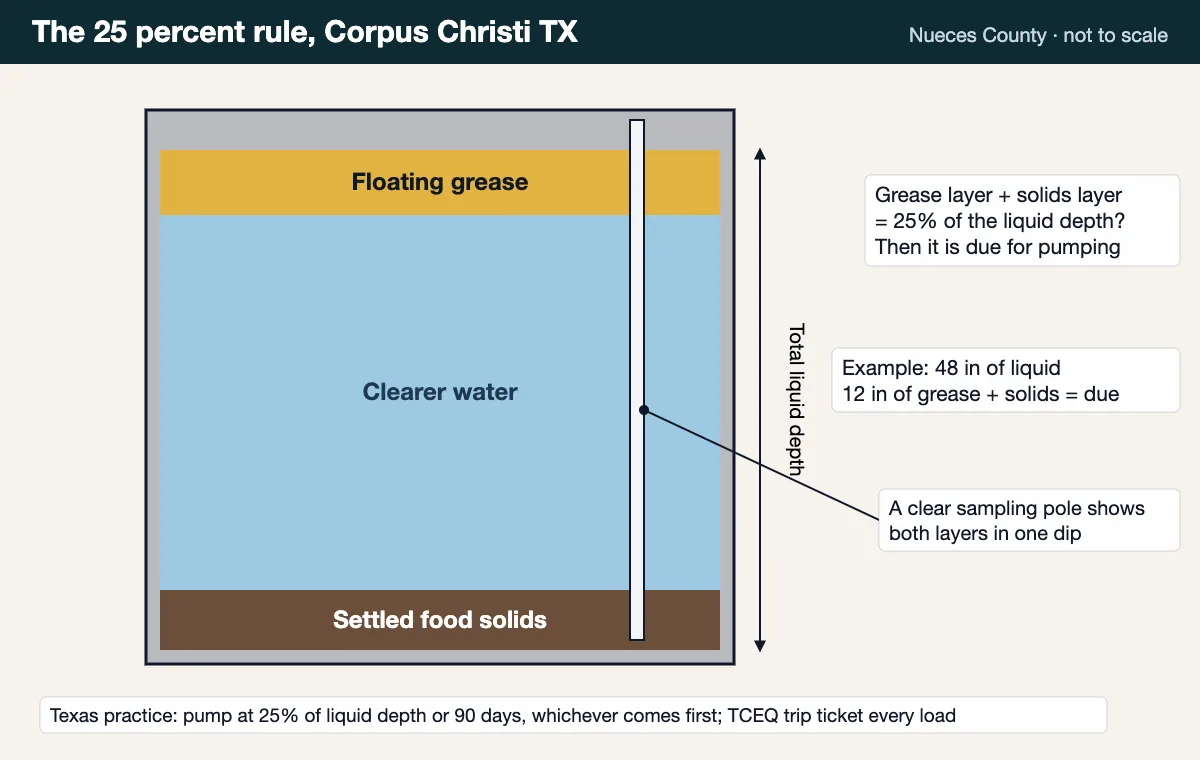
If the tank is already near its 25 percent line, this is not even an extra visit. It is your next scheduled service brought forward. Bringing it forward is free. Pushing it past a storm closure is not.
Secure and check outdoor lids
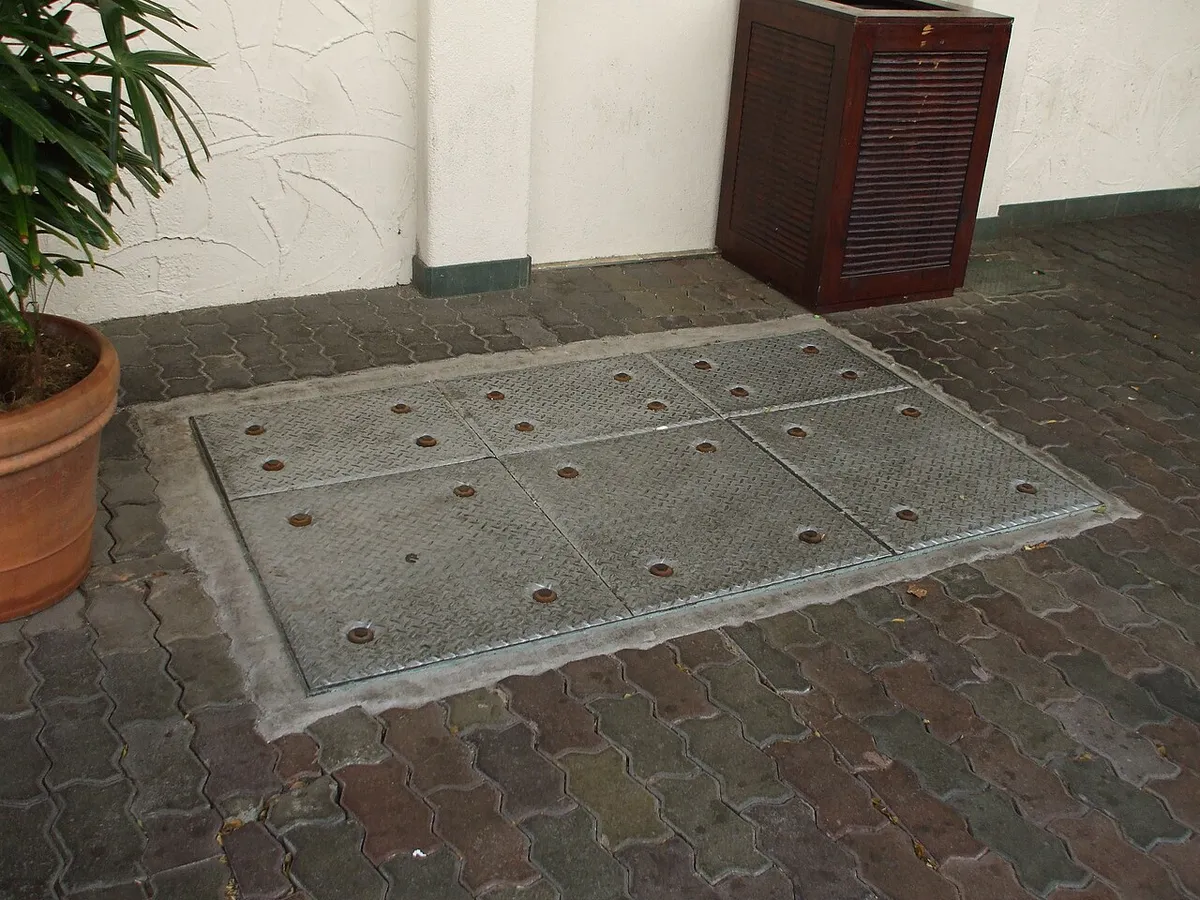
This is where coastal corrosion and storm risk intersect directly. Interceptor lids, frames, and fasteners near the bay corrode faster than inland equivalents. A lid that is already sitting loose in a degraded frame is a lid that can be displaced by flooding or debris. An open interceptor in a flooded parking lot is an uncontrolled discharge and a hole somebody could step into.
Confirm every access lid is seated and secured, and that bolted covers actually have their bolts.
Note any frame that is visibly rusted through or any lid that rocks. Flag it to your landlord or centre manager now rather than after.
Clear debris, leaf litter, and standing material from around the manhole so the cover seats properly.
Photograph the interceptor area as part of your pre storm insurance documentation.
Get your records somewhere dry
Your trip tickets live in a folder in an office that may take on water. Photograph or scan the last couple of years and put the images somewhere cloud based before you leave. Rebuilding a service history after a flood is miserable and entirely avoidable. What those records need to contain is covered in the Nueces County rules guide.
Run the kitchen down properly
Whatever deep clean happens on the last shift before closing, remember that it all lands in the trap. A full end of service clean down of a cook line puts a real load into the tank at exactly the moment you want it empty. Pump after that clean down, not before it.
During and immediately after
Do not open trap or interceptor lids while standing water remains on site. A submerged tank access is a hazard you cannot see the bottom of, and floodwater in a coastal city carries sewage, fuel, and debris. There is nothing useful to be done at that stage anyway.
If you have an outdoor interceptor and the lot has flooded, assume the tank has been inundated and that its contents have been displaced or diluted. Assume the same for any indoor trap in a kitchen that took water.
Before you reopen
Inspect before you trade. Lids seated, frames intact, no obvious displacement or damage around access points.
Fully pump and clean any tank that was inundated, including scraping and line back flushing, before service resumes. Contents after a flood are not the contents you left.
Check the drain lines. Storm debris and silt can enter a system through a displaced lid or a flooded floor drain, and silt in a lateral behaves like a blockage.
Do not chemically treat the tank. Empty it and refill it with clean water. That is the fix.
Restart your interval fresh. Loading in the first few weeks after reopening is usually heavy because of deep cleaning, so measure rather than assuming you resume the old cycle.
Document everything. A post storm inspection and clean recorded on a manifest is useful for insurance and useful at the first inspection after reopening.
Reopening is when a neglected trap catches you
A kitchen reopening after a storm closure runs an enormous clean down through its drains in a short window: every surface, every piece of equipment, every walk in that lost temperature. If the trap was already near capacity going into the storm, that reopening clean is what finally blocks the line, on the exact day you are trying to start trading again.
Why this is a Corpus Christi page and not a generic one
The bayfront sits right on the water, where storm surge and flooding are a real planning case for any kitchen.
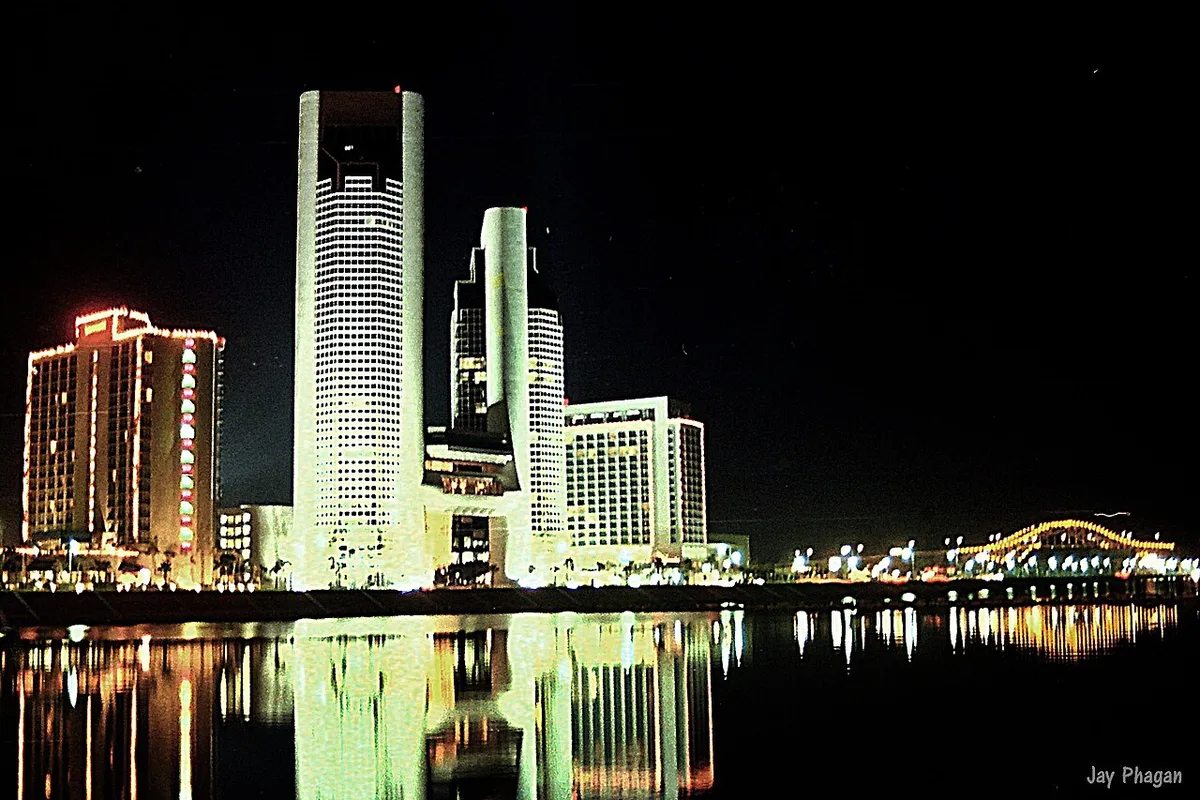
Atlantic hurricane season runs June 1 to November 30, and the Texas coast is exposed for all of it. Corpus Christi sits on a bay with a low lying downtown, a barrier island with causeway access, and restaurant districts on North Beach and the bayfront that are directly exposed to surge. Flour Bluff and Padre Island operators have evacuation and re entry timing considerations that a restaurant thirty miles inland simply does not.
Add the corrosion factor and the picture is specific. The outdoor interceptor at a bayfront seafood house has a lid and frame under constant salt attack, sits in a lot that can take surge water, and belongs to a business that may be closed for a week. All three of those conditions are local, and all three argue for the same cheap precaution: go into the season with the tank on a correct service interval and empty it before anything makes landfall.
Why does a grease trap matter during hurricane prep at all?
Because it is a tank full of putrescible organic waste sitting in a building you are about to leave without power, possibly for days, in a city that may flood. A full trap in a closed kitchen with no airflow and no cooling in August becomes an odor and sanitation problem all by itself. An outdoor interceptor with a loose or corroded lid in a flooded parking lot becomes an open hole and a discharge. Neither is the first thing on anyone's storm list, and both are trivially preventable.
When should I pump before a storm?
As soon as a named system enters the Gulf with any track toward the Texas coast, not when a watch is issued. Once a watch is up, every hauler in the Coastal Bend is fielding the same calls, crews are securing their own equipment and homes, and evacuation traffic is building. The operators who get serviced are the ones who called early. Pumping is also the easiest item on your prep list to bring forward, because an early clean is never wasted.
What if my interceptor floods?
Assume the tank has been inundated and its contents displaced. Do not open lids while standing water remains. Once water recedes, have the tank inspected and fully pumped before reopening, and check that lids are seated and frames intact. Floodwater in a coastal city carries sewage, fuel, and debris, so treat anything that has been submerged as contaminated rather than merely wet.
Know where every lid is and that each one is secure before a storm: a loose lid in a flooded lot becomes an open hole and a discharge.
Should I put anything into the trap before evacuating?
No. Do not add enzymes, bleach, deodorizers, or anything else. An empty tank refilled with clean water is the correct state to leave it in. Chemicals added before a closure make the waste more hazardous to whoever pumps it afterwards and do nothing for odor that emptying does not do better.
How long after reopening should I book the next clean?
Book a post storm inspection and clean before you trade rather than after. Then treat your next measured interval as a fresh start, because the tank state after an extended closure and possible inundation is not comparable to your normal cycle. If a deep clean out of the whole kitchen goes down the drains during reopening prep, expect the trap to load fast in the first few weeks.
Is hurricane season really the whole summer?
Atlantic hurricane season runs from June 1 to November 30, and the Gulf is in play for essentially all of it. For a Corpus Christi kitchen the practical implication is that your grease trap should not be allowed to sit near capacity at any point in that window, because the lead time between a system forming and a landfall decision can be short.