Outdoor in ground interceptors from 500 to 2,000 gallons and beyond. Manhole access, full load removal including the compacted solids on the floor of the tank, and a manifest that records what actually came out.
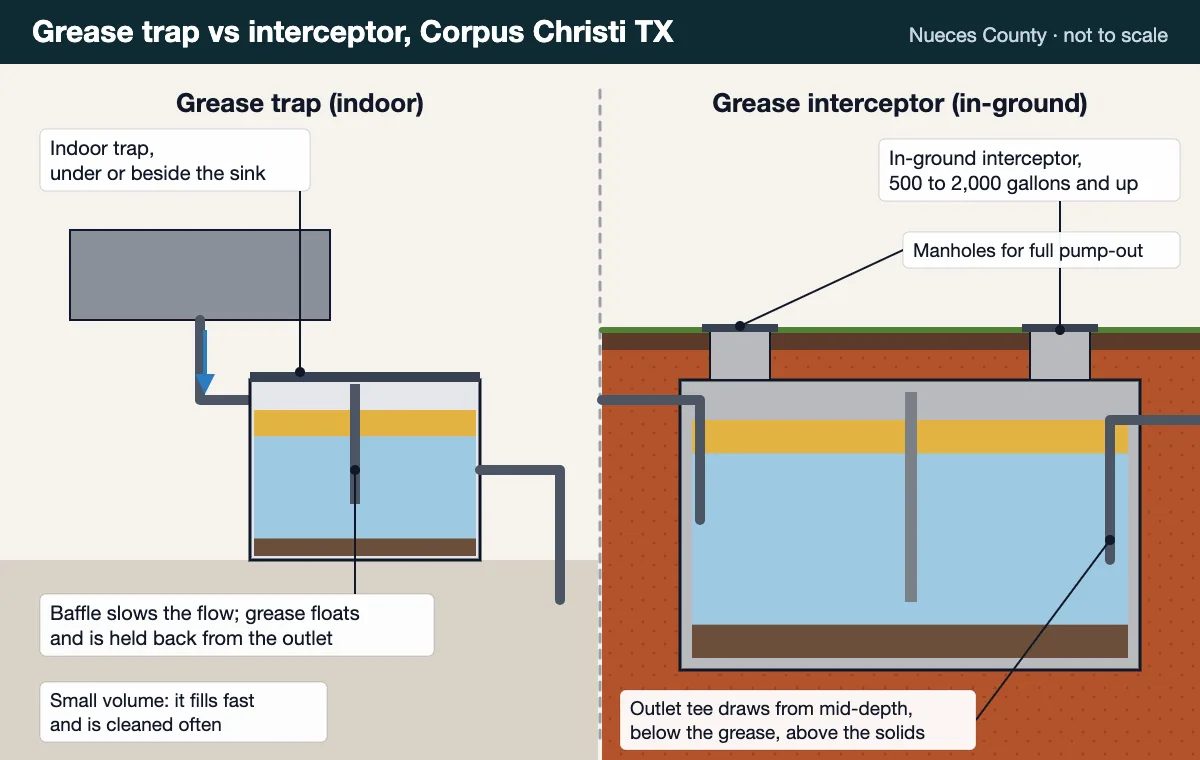
The in-ground interceptor is the tank nobody looks at: buried in the lot, 500 to 2,000 gallons and up, with only the lids showing.
An indoor grease trap gets attention because it is in the kitchen, it smells when it is overloaded, and the lid is under somebody's feet. An outdoor interceptor sits under a manhole cover in the parking lot, out of sight, and it is entirely possible for a restaurant to go two or three years without anybody on the management team ever seeing inside it.
That is exactly why interceptors are so often found in bad shape. The failure mode is slow and invisible: solids build a compacted layer on the floor of the tank that a routine skim never touches, the effective volume drops year over year, and the retention time gets too short for separation to actually happen. The tank is still there, still full of liquid, but functionally it has become a pass through.
You find out when the lateral blocks, or when the city flags grease at your connection, or when a health inspection asks for cleaning records nobody can produce. All three are worse and more expensive than the cleaning would have been.
How to tell if your interceptor has been skimmed for years
Look at the volume line on your old trip tickets. If the tank is 1,000 gallons and every ticket shows 200 or 300 gallons removed, you have been paying for a skim. A genuine full clean on a 1,000 gallon interceptor removes close to 1,000 gallons, because the water column comes out along with the grease and the sludge.
What a full interceptor service includes
Set up and cone the work area so the lot stays safe while the manhole is open and hose is run.
Open the access lids and check the frame, gasket, and fastener condition. On coastal sites this is a real inspection, not a formality.
Measure grease cap depth, solids depth, and total liquid depth before anything comes out, and record them on the ticket.
Evacuate the full contents. On a heavily loaded tank that means mobilising the compacted bottom layer first so it will actually move through the hose.
Scrape the walls, the baffle faces, and the tee fittings.
Back flush the inlet and outlet so grease set up in the short runs either side of the tank is pushed clear.
Inspect the baffle wall for cracks, erosion, and missing sections, and photograph anything failing.
Refill with clean water to operating level and reseat the lids.
Complete the trip ticket with volume removed, transporter registration, and the permitted disposal site, and leave you a signed copy.
Interceptor sizes around Corpus Christi
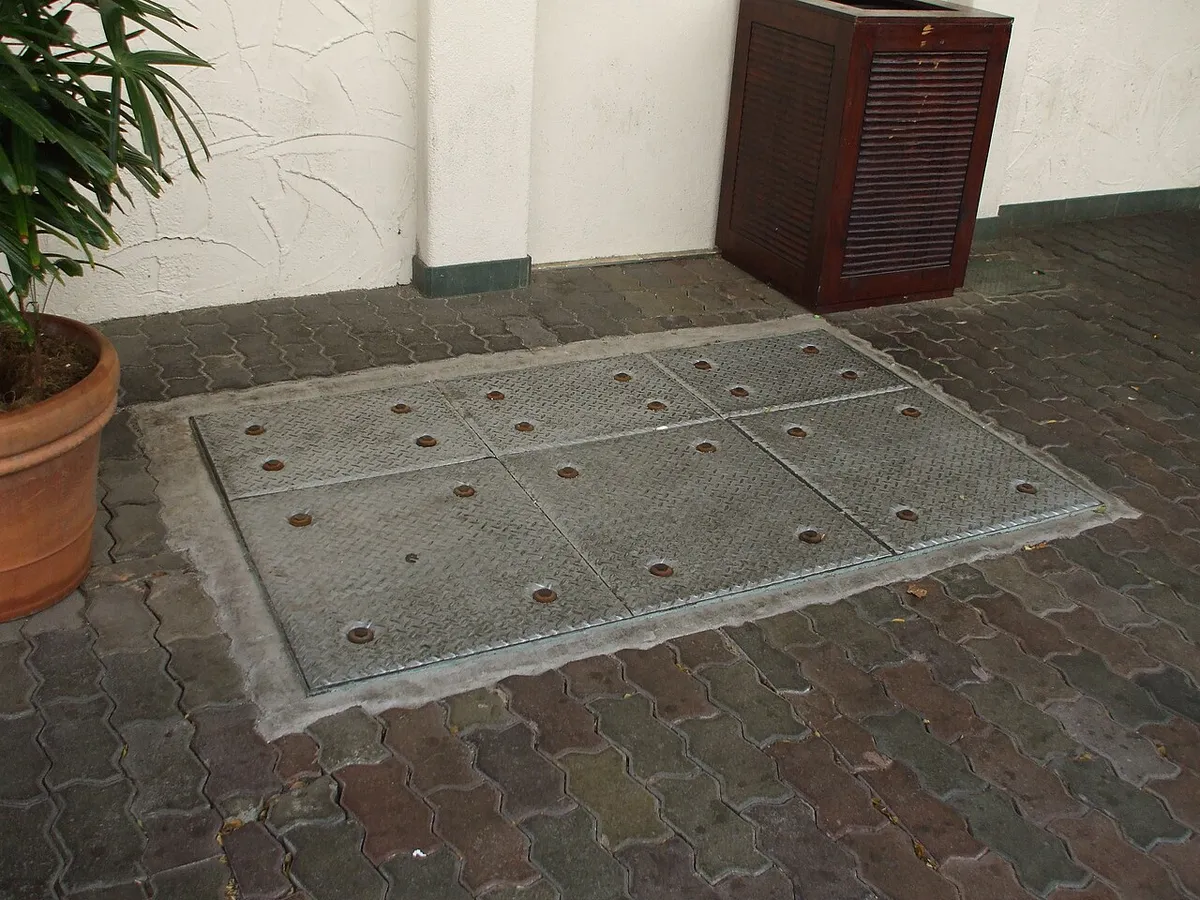
From above, an interceptor is a set of covers in the paving. Their number and spacing hint at its size and how many compartments need pumping.
500 to 750 gallon units
Common on single tenant restaurants built in the last couple of decades and on smaller strip centre pads. Often a two compartment concrete tank with a single access lid per compartment. Cleanable in an hour on a normal cycle.
1,000 to 1,500 gallon units
The workhorse size for full service restaurants, hotel kitchens, and shared centre interceptors along the Padre Island Drive corridor and through the South Side. Usually two or three access points. These are the units most often found with a serious compacted solids layer, because their size makes people assume they never fill up.
2,000 gallons and larger
Schools, hospitals, care facilities, large hotels, arena and event concessions, and high volume seafood houses. Multiple compartments, multiple lids, sometimes a sampling well downstream. Record keeping on these sites is usually tighter because they get more regulatory attention, which is a good thing for the operator as long as the paperwork is actually being kept.
Salt air, lids, and the Corpus Christi problem
This is the part of interceptor work that is genuinely specific to a coastal city. Cast iron manhole frames and lids, and the bolts securing gasketed covers, corrode far faster within a mile or two of the bay than they do inland. North Beach, the bayfront, Padre Island, and Flour Bluff sites all show it.
Three practical consequences. First, a seized lid turns a routine 90 minute clean into a much longer recovery job, so it is worth mentioning in advance if yours has not been opened in a while. Second, a corroded gasket lets odor out into a parking lot or a patio, which becomes a customer complaint long before it becomes a compliance issue. Third, a frame that has rusted through is a genuine failure risk under vehicle load in a working parking lot, and that is a liability problem, not a grease problem.
Ask for lid and frame condition on every ticket. That gives you a documented trend so a replacement can be budgeted rather than discovered.
Confined space, handled properly
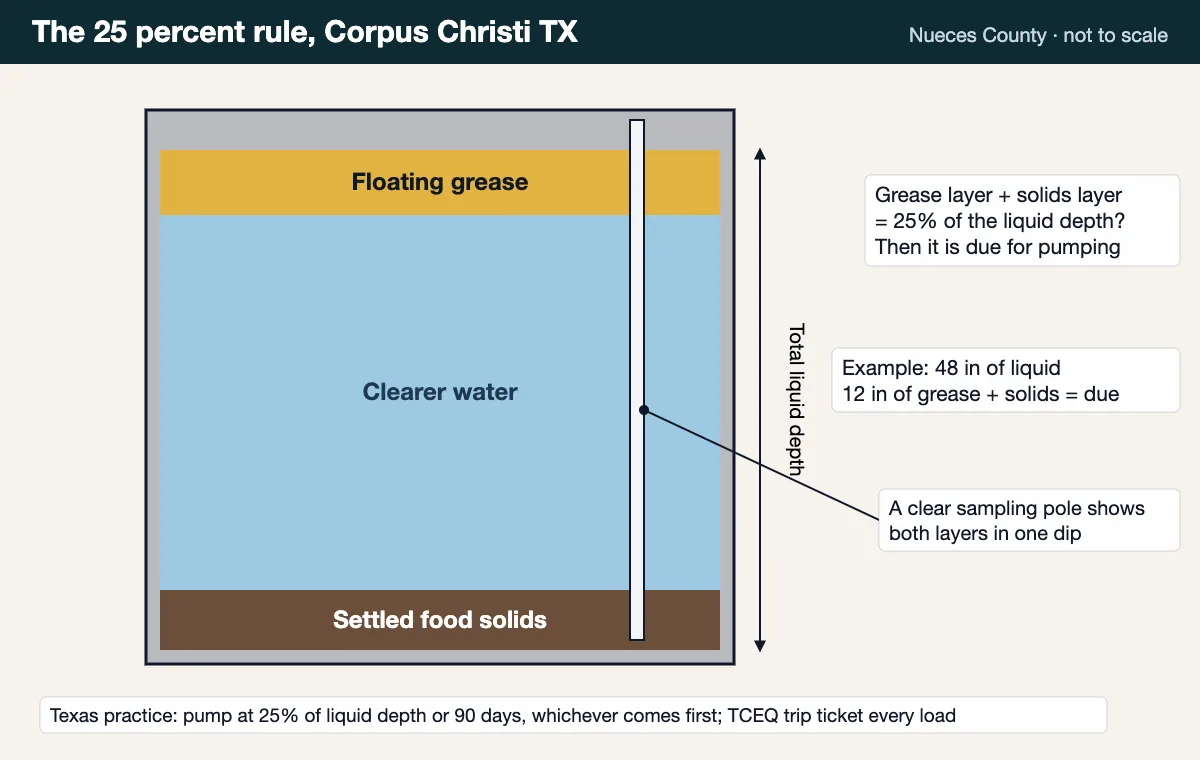
Nobody needs to climb in to measure: a sampling pole shows the grease and solids layers from the lid. Entry into a tank is confined-space work with its own safety rules.
An in ground interceptor is a permit required confined space. The atmosphere inside can contain hydrogen sulfide and can be oxygen deficient, and both are capable of incapacitating someone within seconds of entry. There is a long and grim history of fatalities in exactly this kind of tank, frequently involving a second person who went in to help the first.
Routine cleaning does not require entry and should not involve it. All work is done from the surface through the access openings with vacuum hose and extended tooling. If a tank genuinely needs entry for a structural repair, that is a separate specialist operation with atmospheric monitoring, ventilation, attendant, and rescue provision, and it should never be improvised by a pumping crew. If a hauler has ever offered to send someone down into your interceptor to speed the job up, that is a reason to stop using them.
Scheduling and pricing
Outdoor interceptor cleaning in this market typically runs from around 300 dollars for a small, well maintained unit on a regular cycle up past 1,500 dollars for a large tank that has been neglected. The drivers are gallons removed, how compacted the solids are, access difficulty, and lid condition. See the cost guide for the full breakdown.
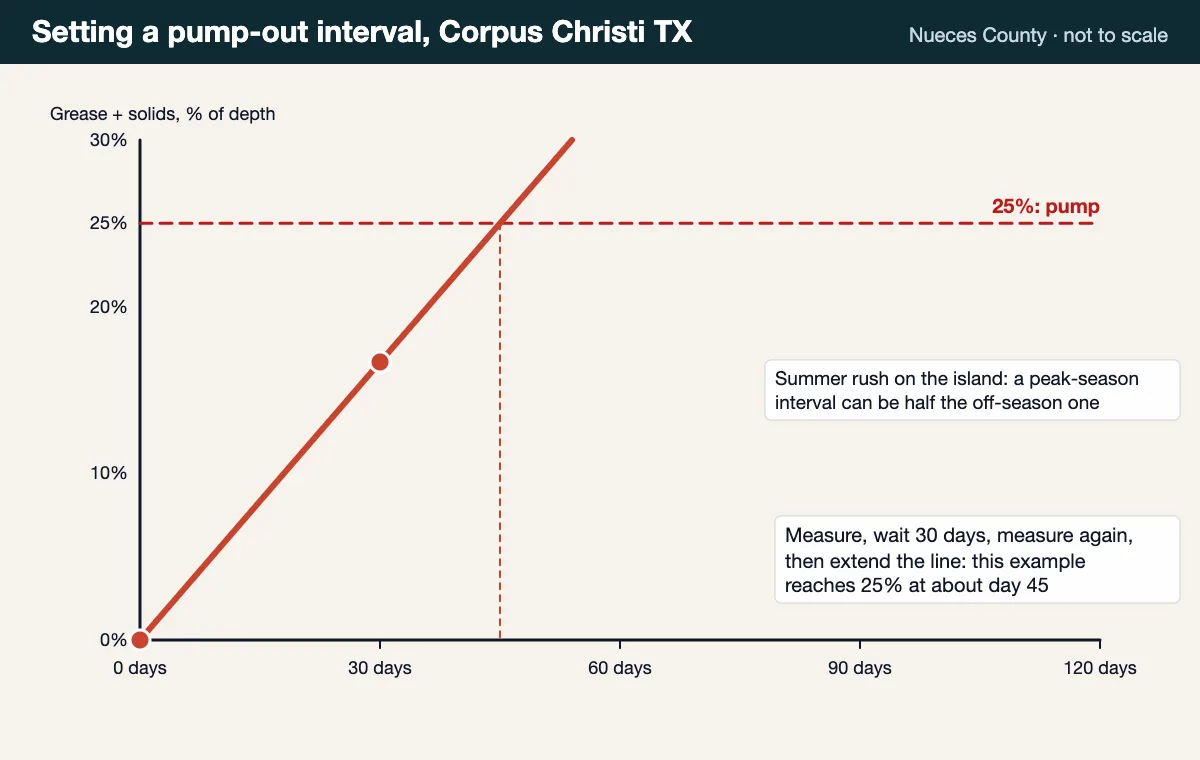
Interceptors suit a scheduled route particularly well, precisely because they are out of sight and easy to forget. Most sites settle on a 60 or 90 day cycle, set by the measured depths rather than a default.
What is the difference between a grease trap and a grease interceptor?
Size and location, mostly. A grease trap is the small indoor unit under or near a sink, typically 20 to 100 gallons, made of steel or plastic. An interceptor is the large in ground tank outside, usually concrete, from 500 gallons up past 2,000, accessed through a manhole lid in a parking lot or service yard. The separation principle is identical. The practical difference is that an interceptor holds a much bigger load, takes longer to pump, and needs heavier equipment to get the lid off.
Does anyone need to enter the tank?
No, and that is important. An in ground interceptor is a confined space with a genuine atmospheric hazard from hydrogen sulfide and oxygen displacement. Routine cleaning is done from the surface with vacuum hose and scraping tools through the access openings. Any job that would require entry is a specialist confined space operation with its own permit, monitoring, and rescue provision, and it is not part of a routine clean.
My interceptor lid is rusted shut. Can you still service it?
Usually yes, but mention it in advance so the crew brings what it needs and prices the time honestly. Corroded lids and frames are common on Corpus Christi sites near the bay, where salt air attacks cast iron and fasteners far faster than inland. A seized lid can often be freed on site. If the frame itself has failed, that is a repair job and a trip hazard in your parking lot, so you will want it addressed regardless.
Interceptors get the same treatment as small traps: measure, re-measure, and book before the 25 percent mark or 90 days.
Who pays when an interceptor is shared between tenants?
Whatever the lease says, which is often less clear than it should be. Practically, the hauler can invoice a single party, usually the landlord or the centre manager, or split it however the centre has agreed. The trip ticket records the full load so there is an objective record of what was removed, which is useful when one tenant with a fryer is driving most of the load and the others are being asked to split evenly.
How long does an interceptor clean take?
A 750 to 1,000 gallon unit in reasonable condition is typically 60 to 90 minutes. A 1,500 to 2,000 gallon unit is usually 90 minutes to two and a half hours. Tanks with a heavily compacted solids layer take longer because the sludge has to be mobilised before it will move through the hose. Tanks that have not been fully cleaned in years can take most of a morning.
Can an interceptor be serviced while the parking lot is in use?
It is better not to, for everyone. The work area around an open manhole needs coning and a clear path for the hose run back to the truck. Early morning before the centre opens, or a scheduled slot when the lot is quiet, is faster and safer for everyone. For strip centres along SPID an early Sunday often works best.
Send the tank size if you know it, the address, and whether the lid opens easily. If you are not sure of the size, tell us how many manhole covers are in your service yard and it can be worked out.